
 Article
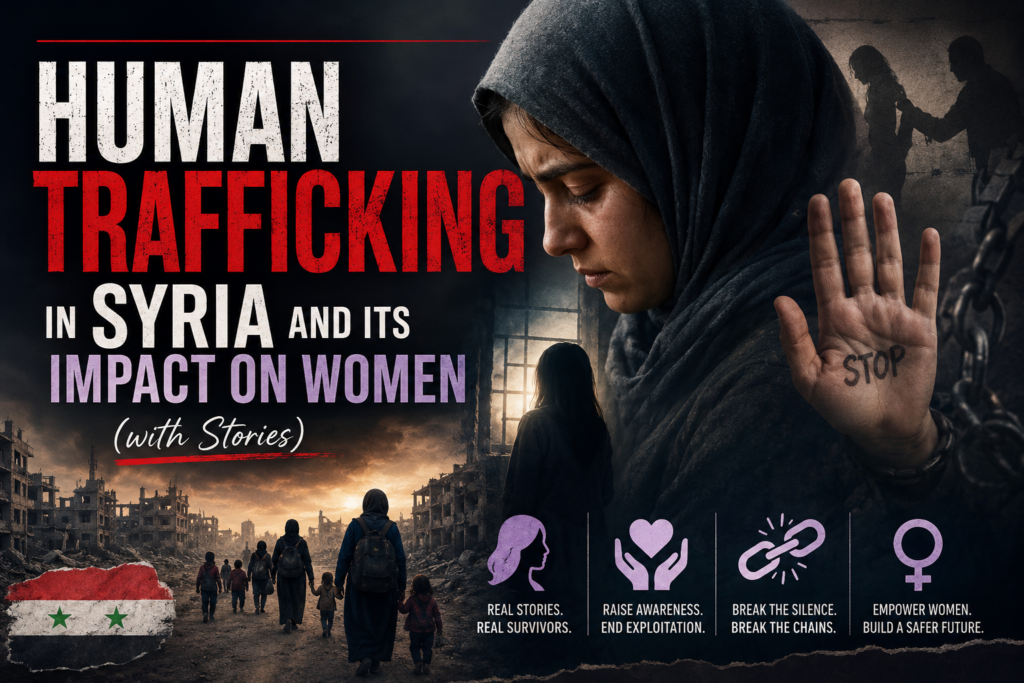
Abstract: Human Trafficking in Syria and Its Impact on Women.
Human trafficking in Syria has increased significantly due to prolonged conflict, mass displacement, and economic instability since 2011. The breakdown of social structures and legal protection has made women and girls highly vulnerable to exploitation. This includes sexual exploitation, forced labor, forced marriage, and abuse during migration journeys. Traffickers often target displaced women in refugee camps or border areas, taking advantage of their limited access to safety, education, and financial resources.
The impact on women is severe and long-lasting. Victims experience physical violence, psychological trauma, loss of freedom, and social stigma. Many are separated from their families and face difficulty reintegrating into society even after escaping exploitation. These conditions also affect their access to education and employment, limiting future independence and recovery.
Despite these challenges, international organizations and humanitarian agencies are actively working to combat trafficking through rescue operations, legal support, awareness campaigns, and rehabilitation programs. Some survivors have transformed their experiences into advocacy, helping raise awareness and support other victims.
This study highlights the urgent need for stronger protection systems, education, economic opportunities, and international cooperation to address human trafficking in Syria. Empowering women and ensuring their safety is essential for rebuilding communities and restoring human dignity in conflict-affected regions.
Scroll to read the preview. Download for the complete document.
Metrics are updated in real time as the article is accessed and downloaded.
Comments
Leave a Comment